¡Que Ver!
>> 21 July 2010
La expresión cebuana 'Que ver' se deriva de la expresión española 'No tener nada que ver con.' En inglés, 'Nothing to do with.' Ésta es uno de mi favorita entre las expresiónes españolas ya que es fácil de usar.
Himno Filipino Nacional, La Versión Original
>> 27 March 2010
hija del sol de Oriente,
su fuego ardiente
en ti latiendo está.
Tierra de amores,
del heroísmo cuna,
los invasores
no te hollarán jamás.
En tu azul cielo, en tus auras
en tus montes y en tu mar
esplende y late el poema
de tu amada libertad.
Tu pabellón que en las lides
la victoria iluminó
no verá nunca apagados
sus estrellas ni su sol.
Tierra de dichas, de sol y amores,
en tu regazo dulce es vivir.
¡Es una gloria para tus hijos
cuando te ofenden por ti morir!
Que en Paz Descanse, Doctor
>> 29 December 2009
Read more...
Soy Enfermero
>> 24 December 2009
A Glimpse of Manila Ocean Park
>> 10 December 2009


Read more...
Las Virtuosas de Tablon
>> 09 December 2009
Four of our church's biggest cell under the women's network. They call themselves Shaleb. They exemplify the woman of Proverbs 31.
Love It!

Mariposa Bella (Paru-Parung Bukid)
>> 08 December 2009
The Tagalog version is a poor translation of the song which was written and sang in Spanish during the 1890s. Its demise was finally nailed when it became the soundtrack of the 1938 film released by Sampaguita Pictures of the same title (starred by legendary Filipino actors Rudy Concepcion & Rosario Moreno). Don Guillermo Gomez Rivera, a Filipino hispanist, polyglot, broadcaster and Premio Zobel awardee (a literary award honoring the best Philippine letters in Spanish) released an LP entitled Nostalgia Filipina that contains "lost" Filipino songs in Spanish during the colonial period in which Mariposa Bella and No Te Vayas A Zamboanga were recorded. With the help of Instituto Cervantes de Manila, the LP was digitally mastered and released in 2006 for today's generation.
Mariposa Bella
Mariposa bella
de mi tierra inmortal
es la filipina
en su traje natal,
que ostenta unas mangas
con gracejo y sal
y saya de cola
de una pieza de percal.
Con peineta de carey ¡uy!
y un pañuelo coquetón,
y enaguas de ojetes
que la roza el talón,
con el tápiz real
sobre el talle sutil
y es la mariposa
del malayo pensil.
Con peineta de carey ¡uy!
y un pañuelo coquetón,
y enaguas de ojetes
que le roza el talón,
con el tápiz real
sobre el talle sutil
y es la mariposa
del malayo pensil.
Mariposa bella
de mi tierra inmortal
es la filipina
en su traje natal,
que ostenta unas mangas
con gracejo y sal
y saya de cola
de una pieza de percal.
Con peineta de carey ¡uy!
y un pañuelo coquetón,
y enaguas de ojetes
que le roza el talón,
con el tápiz real
sobre el talle sutil
y es la mariposa
del malayo pensil.
Las Palabras del Presidente Manuel Luis Quezon y Molina
>> 21 November 2009
I would rather have a country run like hell by Filipinos than a country run like heaven by the Americans, because however bad a Filipino government might be, it can always be improved.
— Pres. Manuel Luis Quezon M. (August 19, 1878 — August 1, 1944)
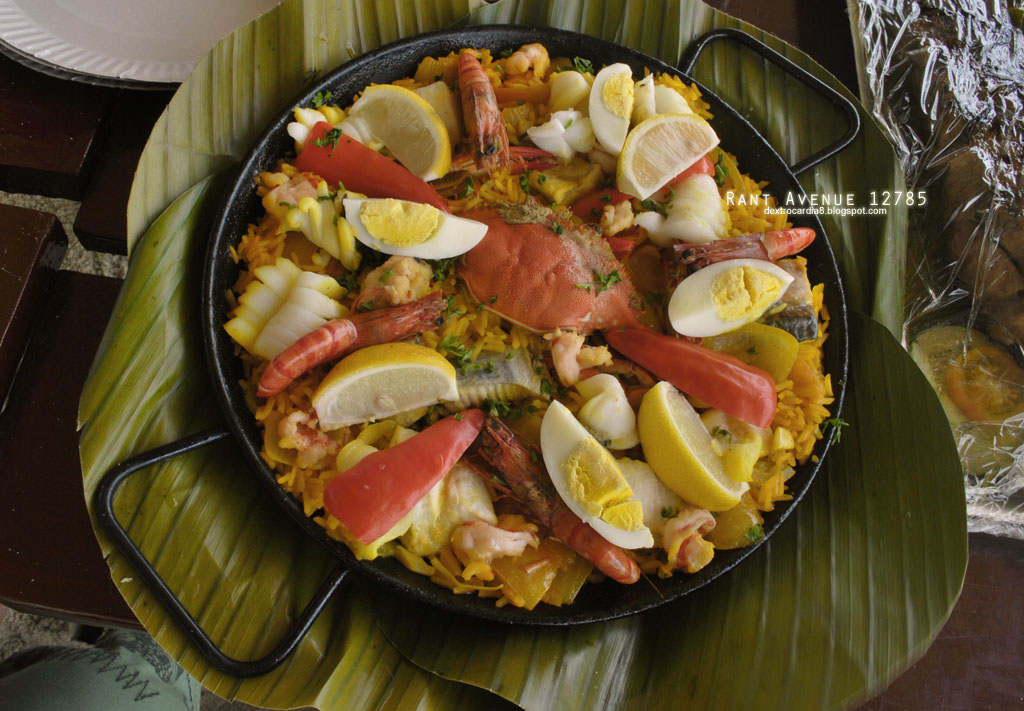
Una Gastronomía Sabrosa
>> 19 November 2009
Ciudad de Davao, La Cuna de Las Águilas
>> 10 November 2009
Filipinas (Una Canción)
>> 03 November 2009

Filipinas
Cantó por el grupo mexicano, Los Panchos
Filipinas, mi madre adorada
Del mundo admirada, por su resplandor
Filipinas, mi novia encantada
La tierra que ofrece respeto y calor.
Filipinas, princesa de oriente
Tú eres la estrella que orienta mi amor.
Filipinas, la tierra de mi amor
Tus hijos te adoran
Te ofrecen la sangre de su corazón.
El Día de La Hispanidad
>> 11 October 2009

I won't be blogging in Spanish for the angloparlantes. =P Today, October 12, the entire Indias is celebrating El Día de La Hispanidad o El Dia de La Raza (Columbus Day) and the Feast of Pilar which is celebrated in the Hispanized city of Zamboanga and some other cities and municipalities here in the Philippines. The Virgin of Pilar was said to be the patron saint of the Hispanic peoples. Why should Filipinos commemorate such celebration? According to history, this is the day when Cristobal Colón (Christopher Columbus) found the Indies at the dawn of the Age of European Exploration.
It was said that 9 months after the discovery of Hispaniola (now, Haiti and Dominican Republic) the first latinoamericano was born from the intermingling of the Indian Natives and Europeans. West Indies or East Indies, the natives were called Indios. The West Indies was the Americas while the East Indies, the Asia-Pacific region and some parts of Asia. Columbus never reached the Philippines we can't argue that. But because of the discovery of the West Indies that drove the exploration of the East Indies where geographically, the Philippines, the Spice Islands and Marianas were found.
There are a lot of disputes and ramifications about commemorating this celebration but in my opinion there's nothing we can do about it. It's history and we can't change it. We should be thankful for the rich culture, shared history and beautiful genetic stock, a bitter-sweet legacy of October the 12th thereafter. I believe the Pre-American Filipino commemorated this celebration. I found a chromolithographicized photo of a headless statue of Columbus at the height of the Philippine-American War. The caption said that the Filipinos vandalized the statue but I believe it was an act done to maneuver the colonial plans of a new imperialist. I'm not sure where it was taken really but I found this in an archive about Old Philippines in Facebook.

Inmersión Dual
>> 09 October 2009
Un gran video de CNN sobre el aprendizaje de castellano en Estados Unidos. La idea de multilingüismo es posible acá especialmente el hablar de español. Los idiomas filipinos tienen muchas palabras del origen castellano. Pienso que sería facil para aprender el idioma bonito para nuestros niños. ¿Por qué tenemos que despojarnos de esto? El español fue uno del empuje para igualdad entre los filipinos de cualquier etnicidad tambien. Fue el primer idioma oficial antes de poner en práctica del uso de tagalo.
¡Qué Bonita Bandera!
>> 30 September 2009
Hmm. So that means other religious groups can sign up for this. The 8 rays represent the first provinces that ignited the revolution: Manila, Bulacan, Cavite, Nueva Ecija, Laguna, Batangas, Bataan & Pampangga. This is too much. They already changed the original national anthem (w/c was sang in Spanish before the American Era, an English version was made—singing it in Spanish was a sign of resistance against the Gringos then Filipino in the late 1950s) which was more practical than this one. We lose a lot of historical treasures of any sort during World War II and now we're losing the original Philippine Flag! It's like changing history. The Philippine National Historical Institute is so against the bill. Maybe what's important is to recognize them as Filipinos and that they should be treated fairly base on our Constitution. Ranting... ☺
Women's Re-Encounter Shots


Taken at Living Spring, Baloy, Cagayan de Oro City. "Choleric? Melancholic? Sanguine? Phlegmatic?" ☺